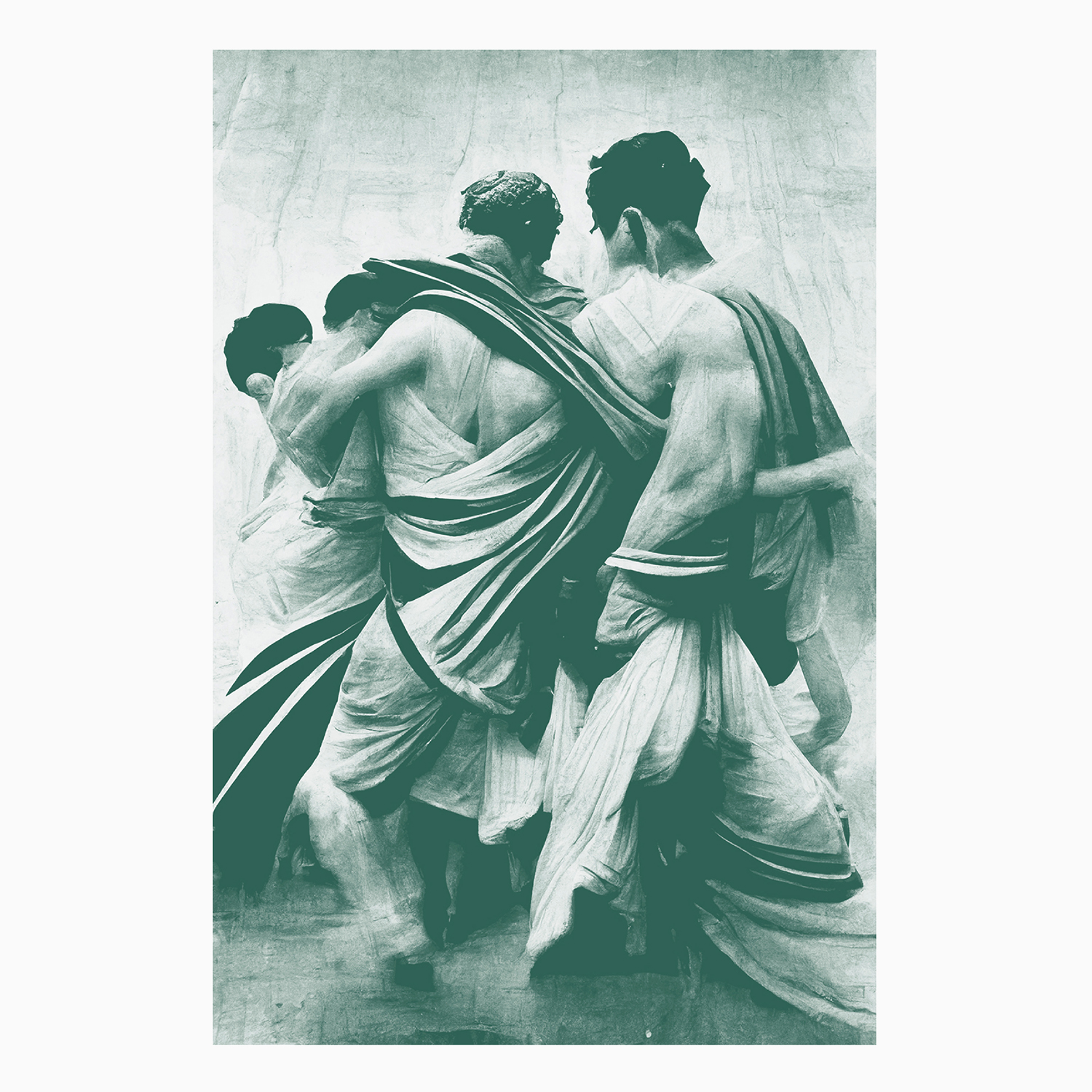
In a radical re-approach to his musical output, Yann Novak devises his most dynamic sonic offering to date. The Voice of Theseus, expands his mode of operation, inviting in key contributions from vocalists Dorian Wood and G.Brenner, both of whom contribute to the core compositional elements of the record. Starting at voice as a point of departure, The Voice of Theseus traces sensation and sense making as a primary means to understanding the reality we find ourselves within, a reality that is fraught by, and forged by, our own physiological and psychological ways of being. This record significantly expands Novak’s oeuvre and in doing so opens an entirely new chapter in his practice.
A note from Yann Novak:
In Greek mythology, the legend of Theseus describes how the king-founder of ancient Athens rescues the children of his city from King Minos’ minotaur on the island of Crete. In commemoration, Athenians began a pilgrimage to honor his victory, taking the ship of Theseus and sailing it from Athens to Delos. It was with this tradition that a philosophical paradox about the historic ship was raised: As the ship was repaired, piece by piece, until it was no longer composed of any original parts, at what point could the ship no longer be considered the same entity?
In recent years, I’ve become interested in exploring the perceptual differences I experience. While some of these differences—partial color blindness and dyslexia—have been with me my entire life, tinnitus caused by hearing damage is a relatively new change to how I experience the world. It is these sensory challenges which have shaped my artistic practice by creating what I call a perceptual insecurity—an uncertainty of how accurately I discern the world around me.
The Voice of Theseus is my attempt to explore the obstacles I face in processing external sensory information. If I have trouble perceiving reds and greens, if I have trouble hearing certain frequencies, if I don’t interpret written language in a standard way, how closely can I experience reality in the way that others experience it? The album asks the listener to question how their unique means of perception and interpretation might differ from that of others.
For The Voice of Theseus, I asked two of my favorite vocalists to assist with this experiment. Both Dorian Wood and G.Brenner recorded vocals for me to manipulate throughout the album. If their original audio is Theseus’s ship, the changes I make to their voices are like the Athenians replacing each of the original vessel’s pieces. And so, how far can these vocals be pushed while still remaining attached to the vocalists’ identities? Where lies the separation between the source materials and the objects they’re used to create?
The myth of Theseus’ ship allowed me to tease at the nuances of how reality can be observed, interpreted, and altered in an indeterminate number of ways; it can be dismantled and rebuilt, many times over. And yet, because of my internal circumstances, a perceptual insecurity remains. As flexible as the true nature of an object or moment may be, inaccuracy looms. There’s no real way to know how great the disparity is between my observational experiences and another’s, and no clear limit of how many pieces of our shared reality can be altered—before it stops being just that.
Track Listing
- A Monument to Oblivion
- Reflex Point
- Traversing the Substrate
- Interlude: The Translator
- Super Coherent Light
- Patterned Behavior
- The Inevitability of Failure
- Seeing Light Without Knowing Darkness
- We Went out, Not with a Whimper, but a Whisper…
Credits
- Vocals by Gabriel Brenner and Dorian Wood.
- Cover image by Joel Westendorf.
- Mastered by Lawrence English at Negative Space.
- Thanks to Gabriel Brenner, Leah Clancy, Madeleine Cocolas, Robert Takahashi Crouch, Lawrence English, Joel Westendorf, and Dorian Wood.
-
[01]
Best of 2023 Lists
Adventurous Music Favorite Releases 2023
Headphone Commute: Music For Bending Light And Stopping Time -
[02]
I first heard Yann’s music on a tape from The Tapeworm. Then I sought out his back catalogue and fell for his sound. Room40 is a remarkable label and the output this year has been overwhelming. I wish I had enough money to collect them all. This record stood out and has stayed with me. It’s very grand but at the same time demure. Moments make me think of the movie The Keep, others I’m floating in a ship from Inception looking into another dimension. Some signatures follow through the lines and lead to new vistas. It’s like walking the same path again and again and having shards of light and memory rain in varied intensity at every corner. Then it dips to deep introspection placing you in a bubble of thick gloop. Only to release you skyward again. And who doesn’t want to fly amongst the stars?
— Peter Taylor, Inside No. 9: The Best of 2023 -
[03]
Artiste interdisciplinaire et compositeur installé à Los Angeles, Yann Novak poursuit une carrière qu’il dit marquée par les différences de perception qu’il vit en tant que daltonien partiel, dyslexique et sujet à des acouphènes. Les fois précédentes, il travaillait une musique électronique aux drones impressionnants, y ajoutant parfois des enregistrements de sa voix qui ne chantait pas vraiment. Cette fois, il a demandé à deux de ses chanteurs préférés, Gabriel Brenner et Dorian Wood, de l’aider dans une expérience de manipulation de leurs voix enregistrées.
Jusqu’à quand reste-t-on une même entité ?
Yann Novak est parti de l’histoire de Thésée qui, en tuant le Minotaure sur l’île de Crète, sauve les enfants athéniens victimes de sa voracité. En mémoire de cet exploit libérateur, les Athéniens entreprennent un pèlerinage à Délos avec le navire de Thésée. Avec le temps, le bateau se détériore, il faut le réparer, pièce après pièce, si bien qu’à un moment on peut se demander si c’est bien encore le navire de Thésée qui accomplit le voyage commémoratif. D’où l’expérience dont je parlais : que reste-t-il de l’identité des voix initiales au fil des manipulations, jusqu’où peut-on aller ? Ce qui est une tentative pour lui de réfléchir aux différences de perception entre lui et les autres, et plus largement entre nous. Aussi la bonne écoute consiste-t-elle, particulièrement pour ce disque, à écouter les morceaux d’affilée : à cette condition seulement, on appréciera les modifications, altérations, en effet très sensibles entre le premier titre, “A Monument to Oblivion” et le titre 7 par exemple, “The Inevitability of Failure”.
Rassurez-vous : il n’est pas nécessaire de se référer à l’expérience évoquée ci-dessus pour apprécier ce disque, de même que vous pouvez oublier les inquiétudes de Yann Novak. The Voice of Theseus confirme le talent d’un grand compositeur. Yann se lance, après des albums relativement brefs, dans une sorte d’oratorio pour voix et électronique. Et c’est de toute beauté !
Au départ, dans “A Monument to Oblivion”, il y a les voix pures, en polyphonie quasi médiévale, avec une ponctuation rythmique espacée, mais forte, et déjà une électronique dont on ne sait pas très bien dans quelle mesure elle contient des voix, déformées. Les deux cheminent de concert… De titre en titre, les voix sont modifiées, puis se fondent jusqu’à disparaître à peu près (on n’en est pas très sûr !) dans le dernier, “We Went out, Not with a Whimper, but a Whisper”, titre qui joue de la paronymie entre “Whimper”(gémissement) et “Whisper”(murmure) : il suffit de presque rien pour que le tout soit changé en un autre. Ce “presque rien” est au cœur des compositions. À la fin, les voix sont vaporisées, fondues, méconnaissables … et troublantes. Entre les deux, drones, orgue et synthétiseurs tissent des toiles somptueuses, enchâssent les voix comme on enchâsse les bijoux. On traverse le substrat (titre 3 : “Traversing the Substrate”) pour rentrer dans un espace vibratoire suave, aux amples pulsations. Comment ne pas être séduit ? Le court titre 4, “Interlude – The Translator”, nous plonge en milieu maritime, avec un étrange oiseau au chant étranglé, caverneux, peut-être comme une pythie antique, pour nous conduire au pays de la lumière, “Super Coherent Light” (titre 5). Des textures mouvantes de synthétiseur, d’orgue, s’animent d’un battement régulier, puis les voix reviennent dans un crescendo puissant, des voix liées en gerbes vocales, et non plus individuelles, pour contribuer au sfumato sinueux de la fin de la pièce.
Arrivés à “Patterned Behavior”, on navigue sur les sommets : morceau à la Jocelyn Pook(le bal masqué chez Stanley Kubrik…), tout en drones troubles autour d’une voix à peine distincte de la trame. L’espace sonore se fait tapis de frottements, friselis froissés, voix archangélique comme rentrée en elle-même : c’est le sublime “The Inevitability of Failure”, la musique semblant se fissurer, se fracturer en micro grains au long d’une série d’ondulations tremblées. Ballet de drones bien opaques, “Seeing Light Without Knowing Darkness” a la majesté d’une avancée aveugle, inconsciente, et grandiose, avec ses enveloppes striées, tandis que des voix perchées incantent la stratosphère, et c’est le dernier titre, déjà évoqué, suite d’ébranlements nébuleux aux portes d’une lumière qui semble toujours se dérober sous les coups de butoir de forces obscures.
Une réussite envoûtante !
— Inactuelles, musiques singulières -
[04]
Der Kalifornier Yann Novak ist ebenfalls ein Aktivist des kompliziert Gemachten und einfach aussehend Klingenden, das sich natürliche physikalische Phänomene, Licht und Klang zunutze macht, um subtil dramatische Soundscapes zu bauen, die ein kompliziertes queer-aktivistisches Leben reflektieren können, ohne je allzu offensichtlich werden zu müssen. The Voice of Theseus (Room40, 7. Juli) ist eventuell sogar sein reifstes und komplexestes Werk bisher, in der Weise, in der klangliche Phänomenologie, Wahrnehmung und ihre Hindernisse gegeneinander abgeglichen und mit dem antiken Mythos des Theseus verbunden werden.
Die berühmte Frage: Ist Theseus’ Schiff, welches im Laufe seiner Fahrt in allen Einzelteilen erneuert und ersetzt wurde, noch dasselbe Schiff, ist der menschliche Körper, der sich auf zellulärer Ebene ähnlich rapide erneuert, noch derselbe Körper, derselbe Mensch? Ganz schön viel Überbau, doch kein bisschen zu viel. Was vom Sound übrig bleibt, überzeugt nämlich durchwegs. Zumal unter manchen der neuen Stücke ein zarter, gerader Beat hervorlugt, der vielleicht noch mehr werden möchte. Wer weiß schon, was die Zukunft bringt?
— Frank P. Eckert, Groove -
[05]
For The Voice Of Theseus, Yann Novak invited vocalists Dorian Wood and G. Brenner to contribute to the core elements of this album. By adding their vocals to his compositions, and merging them with his electronic soundscapes, Novak explores a completely new compositional field, ‘expanding his mode of operation’.
Novak explores his perceptual differences, as he calls them, compared to other people: partial color blindness, dyslexia, and a more recently acquired tinnitus. ‘Sensory challenges that shaped my artistic practice by creating what I call a perceptual insecurity’: ‘If I have trouble perceiving reds and greens, if I have trouble hearing certain frequencies, if I don’t interpret written language in a standard way, how closely can I experience reality in the way that others experience it?’
The listener, on the other hand, will never know in which way the music hé hears may differ from how Novak himself experiences it. One thing is sure, however: it can never be the same.
The ancient Greek legend of Theseus raises a philosophical question: ‘if a ship is repaired, piece by piece, until it was no longer composed of any original parts, at what point could the ship no longer be considered the same entity?’
The same can be applied to the manipulations of the recorded vocals in these pieces: ‘how far can these vocals be pushed while still remaining attached to the vocalists’ identities?’
Questions that are impossible to answer: ‘There’s no real way to know how great the disparity is between my observational experiences and another’s, and no clear limit of how many pieces of our shared reality can be altered—before it stops being just that.’
These are interesting things to ponder about while listening to The Voice Of Theseus, but it’s not necessary background information to fully enjoy the resulting music. There are tracks on which the voices of Wood and Brenner are used (almost) unaltered, most notably on the opening track A Monument To Oblivion. At other times, the vocals can hardly be recognized as such. The music is extremely atmospheric, with enigmatic undertones triggered by their titles which probably refer to different stages in the Theseus legend.
— Peter van Cooten, AmbientBlog -
[06]
Album of the Day on Foxy Digitalis Daily, Listen here.
-
[07]
Another fresh album released via the Australian Room40 imprint is “The Voice Of Theseus”, the latest longplay effort conceived by the ever active composer x sonic researcher Yann Novak. Put out on the circuit on July 7th, 2k23 the nine tracks and roughly 44 minutes spanning album sees Novak taking on composition and musical experimentation from an angle that treats the human voice as basic source material, even with additional contributions from vocalists Gabriel Brenner and Dorian Wood, presenting a festive, angelic and almost ecclesiastical take on floating, billowing Ambient layers backed and complimented by organic low end harmonies, slow rhythmic pulses and a somewhat cosmic atmosphere which is especially prevalent in tunes like “Patterned Behaviour” which, due to its slightly fluttering off-kilter movements, and alongside the subsequent “The Inevitability Of Failure” might be our favorite cut on this longplayer which sees the original vocal source material being morphed and transformed into something entirely new and unrecognizable. Lovely.
— nitestylez.de -
[08]
Composé autour des voix des chanteurs Dorian Wood et Gabriel Brenner, The Voice of Theseus nous interroge sur nos sens et perceptions de ce qui nous entoure ou différencie des autres.
Yann Novak travaille les matières vocales pour les rendre indiscernables de par les traitements qu’il leurs appose, créant un monde fantasmagorique où l’éthéré est source de sensations diffuses.
The Voice of Theseus remonte le temps pour ouvrir ses atmosphères sur des horizons baignés de couleurs dorées et de rayons aux lumières azurées. La mélancolie qui s’en dégage, longe les côtes perdues de peaux hérissées de plaisir et de saveurs chatoyantes.
Yann Novak s’empare de la mythologie grecque pour faire renaitre de ses cendres, un cosmos de dieux et de héros prêts à tout pour tutoyer l’éternité, fusion de forces aériennes et telluriques en forme de miroir des mondes terrestres et célestes. Sublime.
— Roland Torres, SilenceAndSound -
[09]
Am 7. Juli erscheint mit “The Voice of Theseus” eine neue CD des interdisziplinär arbeitenden Sound- und Medienkünstlers Yann Novak. Eine der wesentlichen Neuerungen des auf unserren Seiten bereits im Rahmen einer Drone-Compilation vorgestellten Musikers ist die im Titel bereits implizierte Bedeutung der menschlichen Stimme als Ausgangspunkt und wesentliches Ausdrucksmedium der Kompositionen, die auf “The Voice of Theseus” durch die Vokalbeiträge von Gabriel Brenner und Dorian Wood vertreten ist. Der mythische Stoff des griechischen Helden Theseus, welcher der Sage nach Ariadne aus dem Labyrinth des kretischen Königs Minos befreite und durch den Sieg über den menschenfressenden Minotaurus die Athener von einer länger andauernden Bedrohung erlöst hatte, und mehr noch der anschließende Kult seiner Verehrung wird hier zum Ausgangspunkt über eine grundsätzliche und stark persönlich eingefärbete Auseinandersetzung mit Aspekten der Sinneswahrnehmung als hrmeneutisches Medium. “Starting at voice as a point of departure, The Voice of Theseus traces sensation and sense making as a primary means to understanding the reality we find ourselves within, a reality that is fraught by, and forged by, our own physiological and psychological ways of being”, heißt es beim Label Room40. Das Album ist auch als Download erhältlich.
— African Paper -
[10]
Un disco che permette e incita il distacco dall’usuale per spingere l’ascoltatore in un lungo viaggio dentro l’estrema densità di un suono che porta con sé l’incanto della voce e il fascino del racconto mitologico, mediato e mutato dal tempo che agisce sulla nostra memoria. Traversing the Substrate, si intitola una traccia, ed è esattamente ciò che succede, quando la musica inizia a fluire e le voci di Gabriel Brenner e Dorian Wood innalzano al cielo melodie che giungono al nostro ascolto come antichi canti orfici immersi nell’immobilità di un respiro ambient che silenzia ogni nostra azione. The Voice Of Theseus: un lavoro intessuto di MITO E POSSENTE SILENZIO.
— Mirco Salvadori, Rockerilla Magazine -
[11]
Openings run through the synthetic gloss of Yann Novak’s beguiling, shape-shifting “Super Coherent Light.” Carried deeper by a heartbeat-like rhythm and layered tonal maps, our reality is altered; our perception breaks free of its crutch. Novak takes us to church service from a neon future where our individual experiences become a way to share our world with others to bolster burgeoning connections with different reflections. Taking vocal performances from Dorian Wood and G. Brenner and manipulating them into new, engaging forms, our awareness blooms into colors and sounds we couldn’t previously imagine. “Super Coherent Light” envelops and uplifts us beyond the visible spectrum and into something new.
— Brad Rose, Foxy Digitalis.
- Listen